|
Putting a stop to Cessationism
The Gifts of the Holy Spirit has, and continues to be a subject of much controversy, mis-understanding and abuse. In a day when the Christian church needs to be all the God intends for her, Ray Borlase defends his corner.
First published 08/08/2011
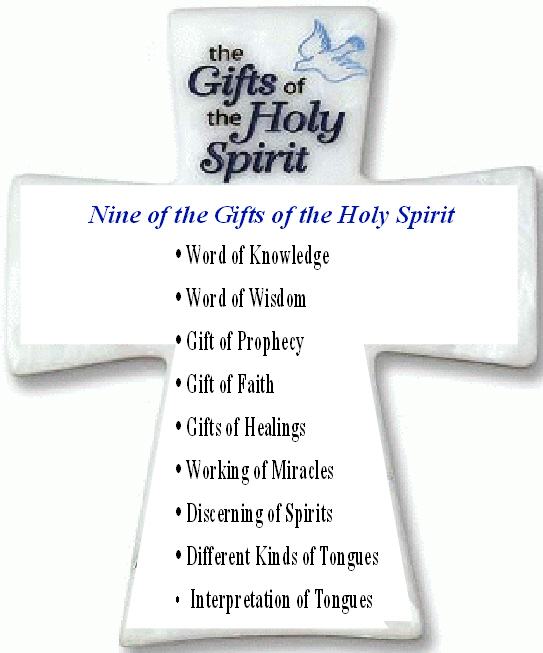 Ed preface: The following is an edited extract from an article entitled 'Cessationism Corrected' which appeared in 'The Watchman' magazine in 1999. Ed preface: The following is an edited extract from an article entitled 'Cessationism Corrected' which appeared in 'The Watchman' magazine in 1999.
The article was written at a time of much controversy within the Christian church worldwide over a series of movements which started in North America. The author, Ray Borlase, defends his theology on the present-day availability and use of the gifts of the Holy Spirit in the face of what he also saw as excesses.
"Love never fails (or ceases); but if there are gifts of prophecy, they will be done away; If there are tongues, they will cease; if there is knowledge, it will be done away. For we know in part, and we prophesy in part; but when the perfect comes, the partial will be done away." (1 Corinthians 13:8-10)
PAUL, in his writing to the church at Corinth, made it clear the day was coming when prophecy, tongues and knowledge would cease. The question is: has that day come?
The cessationist would say that it has; the charismatic would say that it has not. [The word charismatic comes from the Greek word meaning 'gift' and is especially linked in 1 Corinthians 12 to the gifts of the Spirit.]
Who is right - the cessationist or the charismatic?
Charismatic Chaos
Part of the difficulty has arisen because of the deception which has developed within the Charismatic Movement. Some would go as far as to say that the whole movement began in deception: others would say that the gifts of the Spirit had never fully been lost and were being restored again to the Church. We would take the latter view while at the same time being immensely concerned about the deceptions which have crept into the Charismatic Movement. It is one of the reasons why we have an article in most editions of The Watchman called 'Dangerous Deceptions'. We even have reservations about talking about Charismatic churches or the charismatic Movement because it puts undue weight on the gifts of the Spirit whereas the fruit of the Spirit is equally important. Indeed the Charismatic Movement has put undue emphasis on the Holy Spirit often to the neglect of the Father. Whereas the Holy Spirit was once the forgotten member of the Trinity, it is now God the Father who is overlooked.
The Cessationist Position
There are two main arguments which they employ. Firstly, they argue that signs and wonders were part of the apostolic ministry, and once the ministry of the apostles ceased, then the gifts ceased. Rightly they would con¬nect signs and wonders with the apostolic ministry for Paul writes: "The signs of a true apostle were performed among you with all perseverance, by signs and wonders and miracles." (2 Corinthians 12:12) What is not so clear is whether signs and wonders were simply the function of apostles and whether in fact the ministry of an apostle did die out.
The basis for their understanding of an apostle must be questioned first of all. They refer to the situation in Acts 1:15-26 where Peter suggests that they should appoint a replacement for Judas among the twelve apostles. He states that the necessary qualification for an apostle was that the candidates should be "a witness with us of His resurrection." The cessationists argue that once those who had seen the Risen Lord had died, then the ministry of an apostle would disappear. They state that Paul comes into this category as he saw the Risen Lord on the road to Damascus, and he seems to give that as support for his apostleship.(1 Corinthians 15:3f)
Yet we have to examine their argument a little further. Is Peter right, in the first place, to appoint a replacement for Judas? They are told to wait in Jerusalem until they are "baptised with the Holy Spirit." Peter is never the most patient of men, and recommends the appointment of a successor to Judas as an apostle. Not being filled by the Holy Spirit, was he led by the Holy Spirit in this selection? Certainly they were not led by the Holy Spirit in choosing Judas's successor; they drew lots - most spiritual! The man they chose was Matthias - and we never hear of him again!
In any case, if we examine the criteria set out by Peter, it is not only that the person should be a witness of the resurrection, but have been with Jesus from the beginning. Based on Peter's criteria even Paul could not have become an apostle - and yet he was!
What is an Apostle?
We do not have the space to go into this matter in great detail, but the Greek word (apostolos) comes from the verb anoateaw meaning 'to send'. An apostle is one who is sent.
There seems to be four categories mentioned in the Scriptures:
a) Jesus is described in Hebrews 3:1 as 'the Apostle'. He was uniquely sent by God the Father.
b) There were the twelve apostles sent by Jesus (John 20:21)
c) There were other apostles sent by the Holy Spirit. Paul and Barnabas are described as apostles (Acts 14:14) who responded to the prompting of God by the Holy Spirit. "The Holy Spirit said, 'Separate for Me Barnabas and Saul for the work to which I have called them.' .... So being sent out by the Holy Spirit..." (Acts 13:2,4) It would seem that Adronicus and Junias would come under this category as well. (Romans 16:7)
d) 'Apostolos' is sometimes translated in a less technical sense as a messenger instead of apostle as in 2 Corinthians 8:23 and Philippians 2:25.
Obviously the latter does not affect our understanding of an apostle, but we do need to understand that the Greek word is used in a less formal sense. What is clear, however, is that Paul certainly did not fit fully Peter's criteria, but it does not seem to matter to the Holy Spirit in sending out Paul and Barnabas as apostles.
Added to that, we see that Paul saw himself as a wise master builder who laid the foundation of the Church with Apollos building upon it. (1 Corinthians 3:10) In Ephesians 2.20 Paul states that the church in Ephesus has been built upon the foundation of the apostles and prophets. Clearly the work of apostles is foundational.
They act as mature missionaries (sent with a mission) laying the foundation of the Church with others later carrying on the work. In this they differ from evangelists who also preach the gospel, but apostles are giving clear instruction (teaching) for the saints to be established as the Body of Christ. Equally in Ephesians 4, there is no evidence that the work of apostles would come to an end. Inevitably there must always be those who establish churches in new areas as the gospel is taken further afield.
The main point that we are making is that the cessationists cannot prove that the role of an apostle died out. Their definition of an apostle is based on the criteria which Peter laid down, which is obviously false, as Paul could not possibly fit it for he was never involved in Christ's earthly ministry. We rather doubt whether Barnabas, Adronicus and Junias would fit that description either.
Signs and Wonders
A further objection must be raised in that it was not just the apostles who produced signs and wonders. Stephen performed great signs and wonders (Acts 6:8) and so did Philip (Acts 8:6). What is more, Mark's gospel makes it clear that believers (not just apostles) may be used to bring about signs and wonders. "These signs will accompany those who have believed: in My name they will cast out demons, they will speak with new tongues; they will pick up serpents, and if they drink any deadly poison, it shall not hurt them; they will lay hands on the sick, and they will recover." (Mark 16:17,18)
The cessationists argue that when the apostles died out the signs ceased with them. Yet signs and wonders were never limited to the apostles only, so even if the apostles died out, the signs would not necessarily cease.
What is 'the perfect'?
We need now to examine the other argument of the cessationists. It is based on the words already quoted at the beginning of this article. Many of the Plymouth Brethren maintain that when 'the perfect' came, then the gifts would pass away. They maintain that 'the perfect' has come in the form of the Bible, so the "gifts of the Spirit" such as prophecy and tongues have come to an end. What does Paul have in mind when he writes: "when the perfect comes the partial will be done away."?
He has already stated that "we know in part" but he continues by saying, "For now we see in a mirror dimly, but then face to face; now I know in part, but then I shall know fully just as I also have been fully known." The context makes it abundantly clear that at the moment we do need knowledge, but that knowledge is partial. The day will dawn when we know everything.
Even with the Scriptures our understanding is limited. We certainly do not know as God knows us, but when we reach Heaven, or when the Lord returns, then we shall have full understanding. That is when the perfect comes!
In any case, if these gifts were about to disappear (for Scripture was already being written) why does Paul take so much time writing about the gifts of the Spirit? (Chapters 12-14) Why does he encourage the Corinthian Church to desire earnestly spiritual gifts? (1 Corinthians 12:31 and 14:1) He shows that tongues, prophecy and knowledge will cease, unlike love, but only when we come to a position of perfect understanding.
The fact is that we have not reached perfection yet nor has God removed the gifts of the Spirit. Neither is it true that the apostles alone performed signs and wonders. Even if the role of apostles (mature missionaries, planting churches) has disappeared, which I doubt, it was believers who would perform signs and wonders which included casting out demons speaking in tongues and healing. If such signs and wonders as casting out demons have disappeared what is to happen to the demon possessed person?
After all, Jesus said that if He cast out demons by the Spirit of God then they were to know that the Kingdom of God had come amongst them. Jesus came to destroy the works of Satan. Are we no longer to rebuke evil spirits in the name of the Lord? Is God no longer able to give prophetic direction to His Church in sending out new missionaries or to warn of famine as happened in the Acts of the Apostles? Has the day of God's power come to an end? I can find no convincing evidence that God has caused the gifts of the Spirit to come to an end.
The Truth of the Matter
The cessationists position is built on straw. It does not bear close examination because their arguments are built on supposition not on a clear biblical basis. Brothers and sisters, "earnestly desire the gifts of the Spirit" - but please let them be genuinely of God, and let us especially test prophecy as we are told to do! Enough of the false, let us have the proper exercise of spiritual gifts for they have not ceased!
Ray Borlase
1999
 Ray Borlase was Director of Intercessors for Britain over a period of many years and is currently 'standing in' in this role again, following the homecall of his successor Stuart Dool. Ray Borlase was Director of Intercessors for Britain over a period of many years and is currently 'standing in' in this role again, following the homecall of his successor Stuart Dool.
Ray is the pastor of Moreton Christian Assembly and also Chairman of Prayer for Israel.
Ed footnote:The main chapter on the gifts of the Holy Spirit is 1 Cor. 12, but see also Rom 12:3 - 8 and Eph. 4: 7 - 13.
|
Ray Borlase, 23/07/2013
|
|
|
|